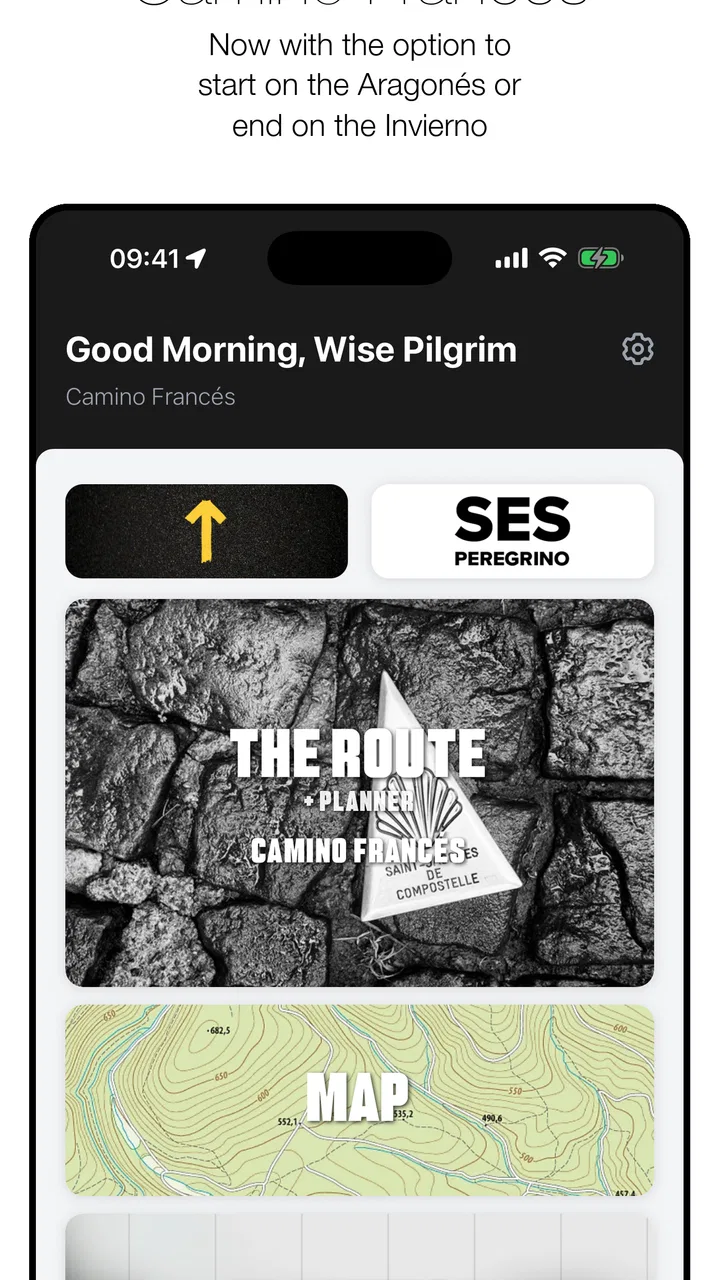
Wise Pilgrim Camino Francés
- 3.8
- Rating
- 10.00K
- Installs
- $4.49
- Price

 Analysis by App-foxy
For a long-distance walk, the most useful guide is not always the one with the most pages. It is the one that helps me answer a practical question at the right moment: where am I, what comes next, and how should I plan the rest of today? That is the main reason I find Wise Pilgrim Camino Francés worth considering. It is a Travel & Local app from Wise Pilgrim Guides built around the Camino de Santiago route between St. Jean Pied de Port and Santiago.
I approached it as a walking companion rather than as a general travel app. That distinction matters. A broad mapping service can be excellent for finding a café or checking a road, while a printed guide can offer richer background reading. This app occupies the space between those options: it is intended to stay close to the rhythm of the Camino Francés and to support decisions made during a walking day.
The app costs $4.49, carries an Everyone age rating, and has reached over ten thousand installs. Its average rating is 3.8 from around 138 ratings, with about 30 written reviews. Those figures suggest a useful but not universally loved tool, which matches my impression: its value depends heavily on whether I want a focused route guide or a more expansive travel-planning platform.
You May Also Like

 Blood Strike: 2.5 Anniversary
Blood Strike’s Loadouts Turn Every Drop Into a Tactical Gamble
A close look at Blood Strike’s custom loadouts: how fast access to signature weapons reshapes its battle royale rhythm, rewards preparation, and narrows the gap between fights.

 Pandora - Music & Podcasts
Pandora’s Music Is Easy to Start, but Harder to Recover
Pandora’s strength is its low-effort path from a seed to a station. Its weak spot is how much confidence it asks you to place in connection, setup, and quiet recovery.

 8 Ball Pool
 Is Built on Rivalries, Rematches, and Routine
A close look at the rivalries, rematches, shared routines, and unanswered safety questions that turn a quick pool match into a persistent mobile community.

 Samsung Music
’s Quiet Strength Is Playing What You Already Own
Its reach comes less from spectacle than from dependable access to a personal library. That simplicity is both the app’s strongest retention engine and its ceiling.

 AccuWeather: Weather Radar
AccuWeather Review: A Quick, Clear Forecast for Everyday Decisions
For everyday plans, the best forecast is the one you can understand quickly. AccuWeather makes rain timing, radar, and local conditions easy to act on, with a few trade-offs.

 Hill Climb Racing
Why Hill Climb Racing Still Turns Crashes Into One More Run
A tiny car, a bumpy hill and one more upgrade: Hill Climb Racing keeps resurfacing because its simple chaos makes every near-miss feel personal.
More From Our News Desk



One capability matters most: turning the route into a usable walking plan
The strongest idea here is route-focused guidance. Instead of asking me to assemble a Camino itinerary from scattered map pins, transport pages, blogs, and saved locations, the app keeps attention on the journey from the French starting point to Santiago. That focus reduces the mental clutter that can make a first pilgrimage feel harder than it needs to be.
In practice, a route guide is most valuable before and during a stage. Before setting out, I can think about the day as part of a continuous pilgrimage rather than as an isolated map search. During the walk, the same focus helps me reorient when a junction, village, or unexpected pause changes my original plan. The real benefit is not simply seeing the Camino on a screen; it is making route decisions with less searching.
That makes the app different from a normal navigation service. A general map is designed for almost every kind of journey, from driving across town to finding a business. Camino Francés is a specific pilgrimage route, so a dedicated guide has a better chance of matching the questions walkers actually ask: what belongs to this route, how does this section fit into the wider journey, and what should I consider before moving on?
I also like that the app is not presented as a social network or a booking marketplace. Its identity is clearer than that. The developer, Wise Pilgrim Guides, has kept the product centered on guidebook-style route support. For someone who wants fewer distractions while walking, that narrow purpose is a strength.
Why route focus changes the experience
On a normal holiday, I often enjoy browsing freely. On a pilgrimage, too much browsing can become tiring. I may already be carrying a pack, managing weather, watching daylight, and deciding whether to continue or stop. A dedicated Camino guide can save small amounts of attention repeatedly, and those small savings matter over a long route.
The app is also easier to understand as a companion to preparation rather than a replacement for every other tool. I would use it to organize my thinking around the Camino Francés, then keep a general map or local information source available for questions outside that route. That division of labor is more realistic than expecting one app to handle every travel need.
How I would use it during a real walking day
Imagine arriving in St. Jean Pied de Port after travel, with limited energy and a first stage ahead. My first use would be quiet preparation: open the guide, review the route context, and decide how much information I actually need before leaving. I would avoid turning the morning into an endless research session. The point is to establish a simple plan, not to predict every minute.
Once walking, I would check the app at natural pauses rather than constantly staring at the phone. A short look at a junction or settlement can be more useful than continuous navigation. This approach also protects battery life and keeps the walk from becoming a screen-based exercise. The app works best when it supports awareness instead of replacing it.
A realistic afternoon example shows where the focused design helps. Suppose I am slower than expected and reach a village later than planned. Rather than opening several unrelated websites, I can use the Camino guide as the starting point for reconsidering the stage. I might decide to pause, shorten the day, or continue with a clearer sense of where I am within the route. The app does not remove the decision, but it makes the decision less scattered.
My preferred workflow would be to check the next section in advance, note the decisions that matter, and then put the phone away. I would also keep a written backup of essential details and carry enough practical information for a day without relying on a screen. That is not a criticism of this particular app; it is sensible behavior for any long walk where weather, battery, and signal conditions can interfere with digital plans.
A better way to prepare than browsing everything
One non-obvious advantage of a route-specific guide is that it can change how I prepare mentally. Instead of collecting dozens of saved places, I can divide preparation into three questions: what is relevant to the route, what affects today’s walking decision, and what can wait until I arrive. This prevents the common mistake of treating every possible detail as equally urgent.
I would also use the app for progressive planning. Rather than locking the entire pilgrimage into a rigid schedule, I would prepare the next section and reassess after walking. That is especially useful for people who are new to long-distance hiking or who do not yet know how their pace will feel over several consecutive days. A guide that keeps the route visible can support flexibility better than a spreadsheet full of fixed assumptions.
Another practical tip is to read when rested, not only when confused. Reviewing the route at the end of the day can help me understand why a section felt difficult and make the next morning calmer. If I wait until a junction to learn everything, I may be too tired to absorb it properly. Used this way, the app becomes part of a simple evening routine rather than an emergency tool.
The best scenario is a first Camino with a flexible plan
I think the strongest match is a first-time pilgrim walking the Camino Francés who wants one dedicated reference point without carrying a large guidebook. This person may appreciate the route’s continuity but still feel uncertain about how to divide the journey into manageable days. The app’s focused identity can make the route feel more approachable.
It is also a good fit for a walker who prefers independent decisions. Some pilgrims enjoy joining organized groups or following a detailed itinerary prepared by someone else. Others want guidance but do not want to surrender control of the day. For the second group, a route guide can provide structure while leaving room to adjust pace, rest, and priorities.
Couples and small groups could use it as a shared reference during planning. One person can check the route while the others discuss whether the day’s plan feels realistic. That is more useful than everyone searching separately, because a common route view helps the group make one decision instead of comparing disconnected information.
The app may also suit repeat pilgrims who already understand the general rhythm of the Camino but want a compact digital companion. Experienced walkers are less likely to need basic reassurance, yet they may still value having the route organized in one place. The benefit for them is convenience, not discovery.
On the other hand, I would hesitate to recommend it as the only resource for someone who expects detailed destination research, broad transport planning, or extensive cultural reading. A dedicated route guide is not automatically a complete travel encyclopedia. If my priority were restaurants, city sightseeing, language help, or complex connections before and after the pilgrimage, I would combine it with other sources.
Who should choose another approach
A walker who dislikes using a phone outdoors may prefer a printed guide and a paper map. That setup can be more comfortable for people who want to preserve battery, avoid notifications, or keep the pilgrimage deliberately screen-free. The app is not a substitute for that preference; it is a digital alternative.
I would also be cautious if my route plans extend beyond the Camino Francés. The app is specifically framed around the journey from St. Jean Pied de Port to Santiago, so someone building a wider Spain itinerary may find a general travel platform more convenient. The dedicated scope is precisely what makes it useful, but that same scope can feel restrictive outside the intended journey.
Finally, people who expect a polished, constantly updated navigation experience should think carefully about their priorities. The listed current version is 6.5.0, and the app supports devices running Android 7.0 or later, but version compatibility alone does not tell me how every phone, connection, or walking habit will feel in the field. I would test the app before departure, learn its layout, and avoid discovering its workflow at the first difficult junction.
The tradeoffs behind a focused guide
The $4.49 price is reasonable for a dedicated guide if I am genuinely walking this route. It is less attractive as a casual purchase for someone only curious about the Camino. A paid app has to earn its place by reducing preparation time or uncertainty, and that value will be personal. For an actual pilgrimage, the cost is small compared with the wider expense of travel, but I would still want the route focus to match my plans closely.
The 3.8 average rating indicates that the experience has room for improvement. I would not treat that number as a reason to dismiss the app, because route guides can divide users according to expectations. Someone wanting a focused companion may be satisfied, while someone expecting a full navigation suite may judge it more harshly. Still, the rating is a useful reminder to approach it as a practical specialist rather than a perfect all-in-one solution.
Another tradeoff is attention. Digital guidance can reduce uncertainty, but it can also encourage overchecking. If I open the app every few minutes, I may lose the social and reflective character of the Camino. The best use is deliberate: check before a decision, confirm when needed, and then return attention to the path and people around me.
There is also a planning tradeoff between confidence and flexibility. A route guide can make me feel prepared, but no guide can predict my energy, weather, delays, or the mood of a group. I would use it to create options rather than promises. That means deciding what I will do if I arrive early, what I will do if I slow down, and when I will stop trying to follow the original plan.
Small habits that make the app more useful
- Review the next section before leaving: learn the shape of the day while rested, then use the phone less while walking.
- Keep a flexible stopping point: treat the guide as support for changing plans, not as a demand to complete a fixed stage.
- Use it alongside practical backup information: carry essentials in a form that remains available if the phone is low on power or unusable.
- Separate route questions from travel questions: let this app handle the Camino focus while using broader tools for airports, trains, city visits, or unrelated errands.
These habits reveal an important distinction: the app’s success depends partly on how I use it. It is most effective when I ask it to do one job well—keep the Camino Francés understandable—rather than forcing it to become my complete travel system.
Who gains the most from this Camino companion
My strongest recommendation goes to independent pilgrims who want a dedicated digital guide, especially those preparing for their first Camino Francés. The focused route coverage can make planning feel less overwhelming, and the modest one-time price is easier to justify when the app will be used throughout a real journey.
I would recommend it less strongly to travelers who are only visiting Santiago, walking a different Camino route, or looking for a broad local-discovery app. In those cases, a general mapping service, a printed guide, or a wider travel app may offer better value. Choosing the wrong kind of tool is more frustrating than choosing a tool with fewer functions.
Wise Pilgrim Guides has made a specialized Travel & Local app rather than a universal travel assistant. That specialization is its central capability and its central limitation. It can help turn a long route into a sequence of manageable decisions, but it cannot remove the need for judgment, preparation, and backup planning.
After weighing the focused experience against the rating and the likely need for complementary tools, I see it as a sensible purchase for the right traveler. I would install it before departure, spend time learning the route view, and use it as a calm reference rather than a constant navigator. If your goal is to walk the Camino Francés with less scattered planning and more freedom to adapt each day, this app earns a place in your preparation.
FAQs for Wise Pilgrim Camino Francés
01What is Wise Pilgrim Camino Francés?
Wise Pilgrim Camino Francés is a mobile guide designed for pilgrims walking the French Way, one of the most popular routes to Santiago de Compostela. It provides practical information about stages, towns, hostels, services, distances, elevation changes, maps, and points of interest, helping users plan each day and make decisions while traveling along the Camino.
02Does Wise Pilgrim Camino Francés work offline?
The app is intended to be useful in areas where mobile coverage may be limited, which is especially important on rural sections of the Camino Francés. However, travelers should download or prepare the available maps and route information before leaving a reliable internet connection. It is still wise to carry a power bank and keep a backup of essential details such as reservations and emergency contacts.
03What information does the app provide about the Camino Francés?
The application focuses on the practical details pilgrims commonly need during the journey. Depending on the selected route section, users can find stage distances, route profiles, accommodation information, food and shopping options, water points, transport services, pharmacies, and other useful facilities. This makes it helpful both for detailed planning and for checking nearby services during a walking day.
04Can I use Wise Pilgrim Camino Francés to plan daily stages?
Yes. The app can help pilgrims organize the Camino Francés into manageable stages by showing distances between locations and the services available along the way. It is useful for comparing shorter or longer walking days, checking where accommodation and meals may be available, and adapting plans when fatigue, weather, injuries, or unexpected closures make an original itinerary impractical.
05Is Wise Pilgrim Camino Francés a replacement for official navigation or safety information?
No. Although the app is a valuable companion, it should not be treated as the only source of navigation or safety information. Trail markings, local conditions, weather forecasts, accommodation availability, and service opening times can change. Pilgrims should use common sense, carry identification and emergency contacts, follow official advice, and verify important details locally, particularly on remote or difficult sections.
Pros
- Detailed route stages with useful elevation and distance information.
- Works offline
- making it practical in areas with limited mobile coverage.
- Includes albergues
- services
- and points of interest along the Camino.
- Pilgrim-focused design keeps essential information easy to find.
- Helpful planning tools for walkers completing the Camino Francés.
Cons
- Some content and features may require an in-app purchase.
- Information accuracy can vary as opening times and services change.
- The app focuses on one route and may not suit other Camino paths.
- Map data and downloads can take considerable storage space.
- Limited social features compared with dedicated Camino communities.

Wise Pilgrim Camino Francés
Gallery